More DIstance, Less Cost
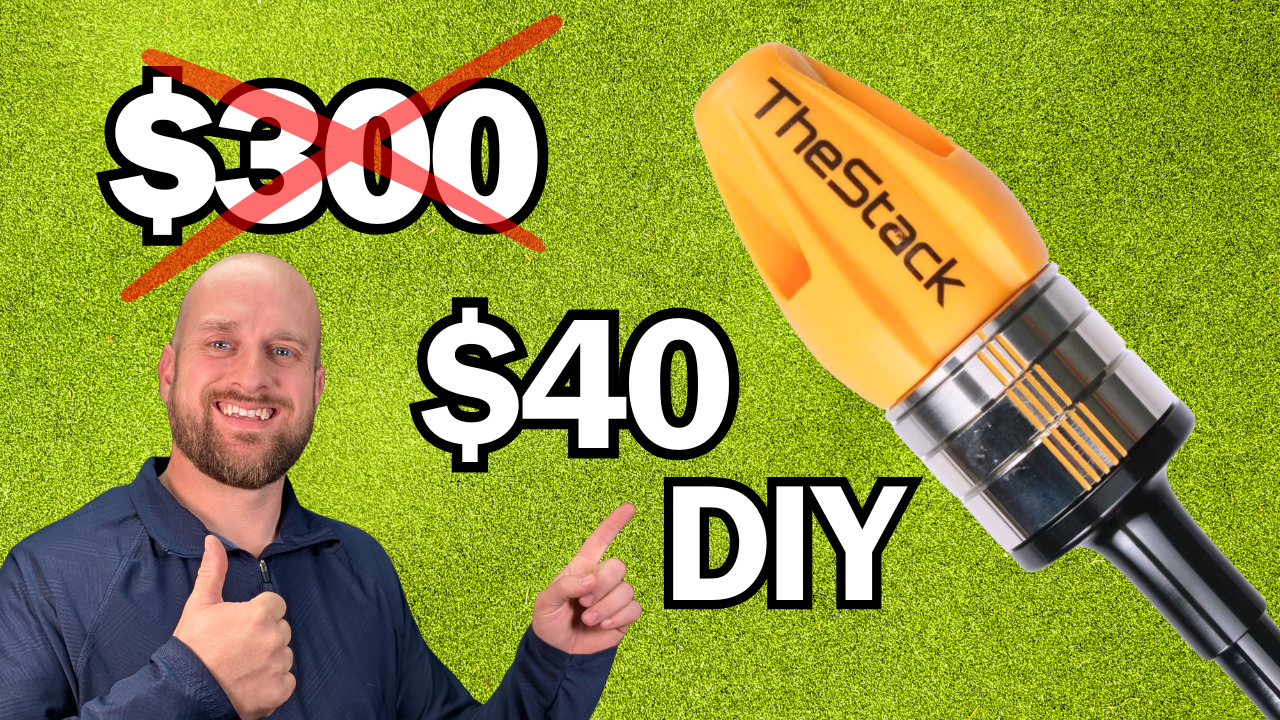
We all want more distance off the tee, and overspeed training is one of the most proven ways to get it. Systems like the official Stack System are incredible tools, but they often start around $300–$400.
I set out to see if I could build a DIY version for under $40 using an old golf club and some basic hardware. After several months of testing—through setbacks and busy family schedules—the results are finally in.
Does the DIY Build Actually Hold Up?
The biggest concern with a homemade speed trainer is safety. Will the weights fly off at 115 mph?
- The Construction: I used a threaded rod epoxied about 1.5 inches into the tip of an old driver shaft.
- Durability: After months of swinging, the epoxy hasn’t budged and the rod remains perfectly straight.
- Security: While some suggested a lock washer, I found that super-gluing the washer “weights” together and tightening the nut down creates enough compression to keep everything secure. I haven’t had a single weight come loose.
Materials & Cut List
To build your own, you’ll need:
- An Old Driver/Wood Shaft: Thrift stores are great for this. Remove the head and clean the tip.
- Threaded Rod: 1/4″ or similar size that fits inside your shaft tip.
- Fender Washers: These serve as your weights.
- Epoxy: High-strength for securing the rod.
- Lock Nut: To keep the weights in place.
The Weight Increments: Instead of the official 5g increments, I built a simplified set of weights. You can adjust these by gluing different numbers of washers together:
- 20g, 40g, 60g, 80g, and 100g increments.
- Note: You can achieve even finer increments by adding smaller, lighter washers to your glue-ups.
How to Train Without the Official App
The official Stack App typically requires a serial number. While you can sometimes bypass this, you don’t actually need the app to see results. The science of overspeed training is simple:
- The Routine: Perform 10 swings with a heavy weight, 10 with a medium weight, and 10 with a super-light weight.
- The Intensity: Swing as fast as you possibly can for every single rep.
- The Rest: Do this every 3 days to allow your nervous system to recover.
The Results: Does it Work?
Even with life getting in the way and having to restart the protocol a couple of times, the speed gains were undeniable:
- Full-Out Max Speed: Increased from 111 mph to 116 mph (+5 mph).
- On-Course Average Speed: Increased from 108 mph to 111 mph (+3 mph).
Gaining 3-5 mph of clubhead speed is the equivalent of adding 10-15 yards of carry distance. Achieving that for the cost of a few pizzas is a massive win for any golfer.
Pro Tip: Choosing the Right Radar
If you’re building this, be careful with the radar you choose. I used a budget $100 radar that occasionally struggled with backswings. For the best experience, look for a radar specifically designed for golf speed training (like the PRGR or the official Stack radar) to ensure you get accurate readings every time.
Ready to add 15 yards to your drive? Start your DIY project today. For more DIY golf hacks and to follow my Project 72 journey, subscribe to the Project Golf – Matthew Ryan YouTube Channel.